
Premises Liability In Texas
What Property Owners Owe and How Courts Draw The Lines
Texas law does not hold property owners responsible for every injury that occurs on their land. Instead, a property owner's legal duty depends almost entirely on two questions: why was the injured person on the property? and was the injury caused by a dangerous condition or by someone's ongoing careless behavior? Getting either answer wrong can be fatal to a lawsuit — the Texas Supreme Court has repeatedly thrown out multimillion-dollar jury verdicts because the wrong legal theory was presented to the jury. This page breaks down the framework Texas courts use, the elements a plaintiff must prove, and the key cases that define this area of law today.
Your status on the property determines what the owner owes you.
Texas follows a classification system rooted in English common law and formalized through the Restatement (Second) of Torts. Every person who enters someone else's property falls into one of three categories — invitee, licensee, or trespasser — and the duty the property owner owes drops sharply as you move down the list. The Texas Supreme Court adopted this framework in cases like Rosas v. Buddies Food Store (1975) and Adam Dante Corp. v. Sharpe (1972), and it remains the governing law today.
An invitee is someone who enters the property with the owner's knowledge and for the mutual benefit of both parties. The classic example is a customer walking into a grocery store — the store benefits from potential sales, and the customer benefits from access to goods. Employees, hotel guests, and even mail carriers typically qualify. Invitees receive the highest level of legal protection.
The property owner must use ordinary care to discover and fix (or warn about) concealed dangerous conditions. Critically, the owner has an affirmative duty to inspect the premises — meaning "we didn't know about it" is not automatically a defense if a reasonable inspection would have revealed the hazard. Either actual or constructive knowledge of the dangerous condition is sufficient. The owner satisfies the duty by doing one of two things: making the condition safe or providing an adequate warning. The owner need not do both. (Corbin v. Safeway Stores, 1983; Fort Brown Villas III Condominium Ass'n v. Gillenwater, 2009.)
A licensee is someone who enters with the owner's permission but only for the visitor's own benefit — not for a shared purpose. Social guests and dinner-party invitees are the textbook examples, which surprises many people: your friend who comes over for a barbecue is legally a "licensee," not an "invitee." The duty owed here is significantly lower. The owner must refrain from willful, wanton, or grossly negligent injury, and must warn of (or make safe) dangerous conditions the owner actually knows about but the licensee does not. The pivotal word is "actually." Unlike with invitees, constructive knowledge is not enough — the owner has no duty to inspect, and a plaintiff cannot argue the owner "should have known." The Texas Supreme Court tightened this standard in Sampson v. University of Texas at Austin (2016), holding that the owner's actual knowledge must be of the specific condition at the time of the accident, not merely an awareness that a dangerous condition might someday develop.
A trespasser — someone who enters without any right, permission, or invitation — receives the least protection. Texas Civil Practice and Remedies Code § 75.007 codifies the common-law rule: the owner owes a trespasser no duty of care whatsoever, except the duty to refrain from causing injury through willful, wanton, or grossly negligent conduct. There is no duty to inspect, warn, or make safe.
The one significant exception involves children. Texas recognizes the attractive nuisance doctrine, drawn from Restatement (Second) of Torts § 339 and codified at Texas Civil Practice and Remedies Code § 75.0025. When all five statutory elements are met — including that the owner knew children were likely to trespass, the artificial condition posed a serious risk, and the child's youth prevented appreciation of the danger — the child trespasser is effectively elevated to invitee status. In Texas Utilities Electric Co. v. Timmons (1997), the Texas Supreme Court confirmed there is no fixed age cutoff; the inquiry focuses on the child's actual mental capacity.
One additional rule catches many people off guard: under the Texas Tort Claims Act (§ 101.022), government entities owe only the duty owed to a licensee — even to people who would otherwise be invitees — unless the injured person paid for use of the premises. This means suing the state or a city for a premises defect requires proof of actual knowledge of the hazard, a substantially higher bar.
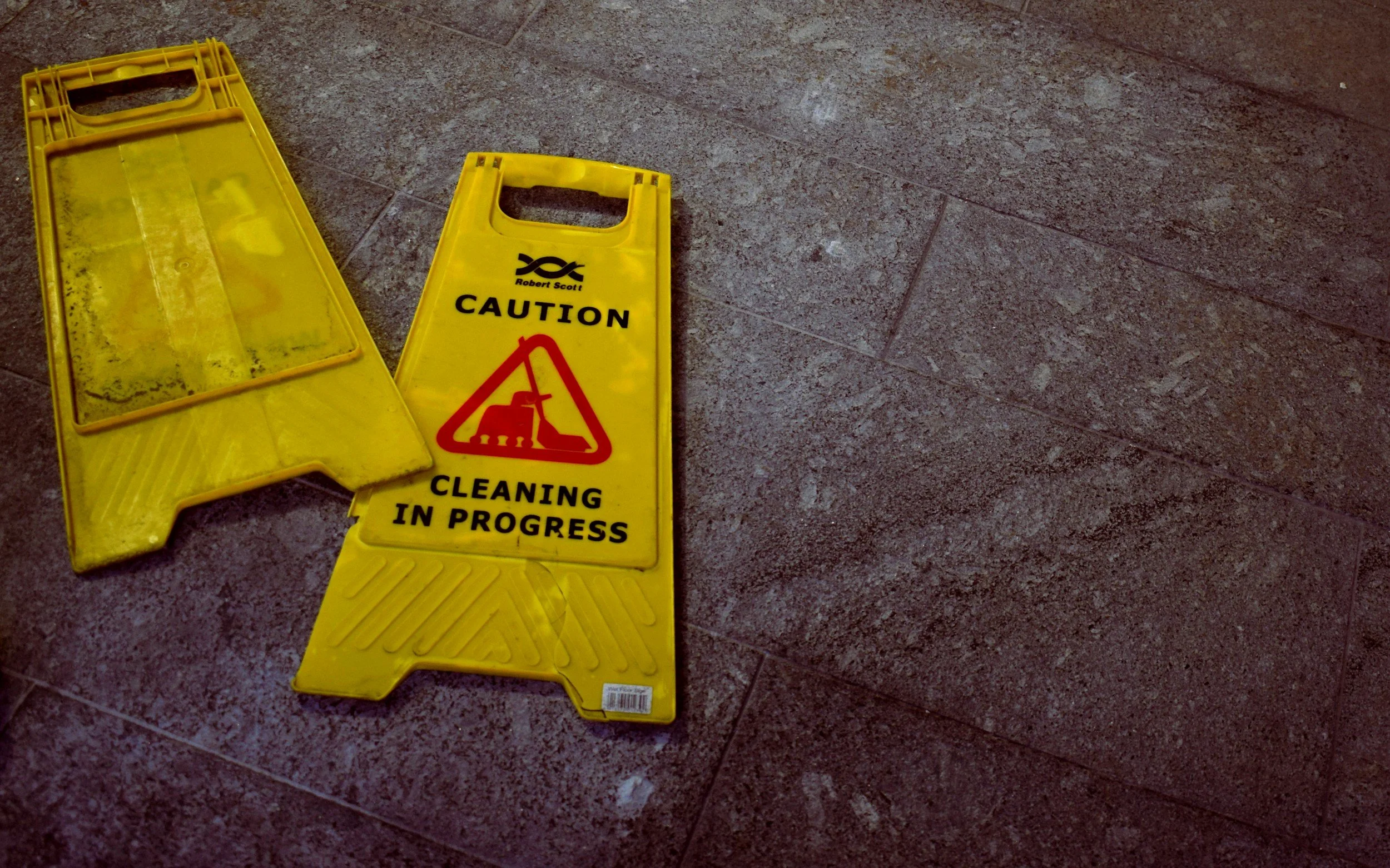
The four Corbin elements every premises plaintiff must prove
The Texas Supreme Court established the required elements for a premises liability claim in Corbin v. Safeway Stores, Inc., 648 S.W.2d 292 (Tex. 1983), a case where a shopper slipped on a grape in a Safeway produce aisle.
Drawing on Restatement (Second) of Torts § 343, the Court held that a plaintiff must prove four things:
The property owner or occupier had actual or constructive knowledge of a condition on the premises.
The condition posed an unreasonable risk of harm to the plaintiff.
The owner did not exercise reasonable care to reduce or eliminate the risk.
The owner's failure to exercise reasonable care was a proximate cause of the plaintiff's injury.
In plain language: the owner knew (or should have known) about something dangerous, the danger was serious enough that a reasonable person would have done something about it, the owner failed to act, and that failure is what caused the injury. Each element must be supported by evidence — if any one fails, the claim fails.
Knowledge is often the hardest element to prove, and Texas courts have developed detailed rules around it. For invitees, there are three recognized ways to establish knowledge, as summarized in Wal-Mart Stores, Inc. v. Reece (2002): the defendant created the condition, the defendant actually knew about it, or the condition existed long enough that the defendant should have discovered it through reasonable inspection. For that third path, the plaintiff must show "it is more likely than not" the condition persisted long enough to give the owner a reasonable opportunity to find it. Speculation will not suffice — in Wal-Mart v. Gonzalez (1998), the Court rejected a plaintiff's testimony that a substance on the floor "seemed like it had been there a while" as mere subjective opinion with no evidentiary value.
The unreasonable risk of harm element has also been refined. In Brookshire Grocery Co. v. Taylor (2006), the Court held that the relevant dangerous condition is the specific condition at the time and place of injury — not some broader antecedent situation that might have produced it. A malfunctioning drink dispenser that periodically dripped was not itself the "dangerous condition"; the ice patch on the floor was. And if the owner lacked knowledge of that specific ice patch, the claim failed. More recently, in Albertsons, LLC v. Mohammadi (2024) — the most recent significant Texas Supreme Court premises liability decision — the Court continued to narrow the knowledge inquiry, requiring specificity about the actual condition that caused the injury rather than general awareness of a recurring problem.
The condition-versus-activity distinction that can make or break a case.
Texas law draws a sharp line between two theories of recovery when someone is hurt on another's property, and confusing them has cost plaintiffs entire cases.
A premises liability claim applies when the injury results from a dangerous condition on the property — a wet floor, a broken staircase, a hidden hole, inadequate lighting. The theory is essentially one of nonfeasance: the owner failed to address a hazard. A negligent activity claim applies when the injury results from someone's ongoing, contemporaneous conduct at the moment of injury — an employee swinging a mop bucket into a customer, or a worker dropping a box on someone's head. The theory is one of malfeasance: someone was actively doing something careless that directly caused harm. (Del Lago Partners v. Smith, 2010; Occidental Chemical Corp. v. Jenkins, 2016.)
The Texas Supreme Court formulated the core test in Keetch v. Kroger Co. (1992): "Recovery on a negligent activity theory requires that the person have been injured by or as a contemporaneous result of the activity itself rather than by a condition created by the activity." In Keetch, a store employee had sprayed a substance on plants roughly 30 minutes before the plaintiff slipped on a residue. Even though the residue was "created by" the spraying, the spraying was long over. The Court classified it as a premises condition, not a negligent activity. As Justice Hecht wrote, "at some point, almost every artificial condition can be said to have been created by an activity. We decline to eliminate all distinction between premises conditions and negligent activities."
Why does this distinction matter so much? Because the two theories impose different burdens of proof. A negligent activity claim uses standard negligence elements: duty, breach, causation, damages. A premises liability claim requires the plaintiff to prove the additional Corbin elements (discussed below), including that the owner had actual or constructive knowledge of the specific dangerous condition. Plaintiffs naturally prefer the simpler negligent-activity framework. But courts will not allow a plaintiff to "plead around the heightened standard for premises defects." (United Scaffolding, Inc. v. Levine, 2017, quoting Sampson, 2016.)
The consequences of getting it wrong are severe. In Clayton W. Williams, Jr., Inc. v. Olivo (1997), the Texas Supreme Court held that submitting a premises liability case under a general negligence jury question — without the Corbin elements — cannot support recovery. The Court rendered a take-nothing judgment, not merely a new trial. Two decades later in United Scaffolding v. Levine (2017), a pipefitter fell through a scaffold hole and won nearly $2 million from the jury. The Texas Supreme Court reversed and rendered a take-nothing judgment because the case was submitted as ordinary negligence when it was actually a premises defect. The Court added a devastating procedural rule: the defendant has no obligation to object when the plaintiff uses the wrong theory. A defendant can sit silently through trial and raise the issue for the first time after the verdict.
A plaintiff may plead both theories in the alternative, and doing so is standard practice. But at the jury-charge stage, only the theory the evidence actually supports will be submitted. The practical takeaway: correctly classifying the claim is one of the single most consequential strategic decisions in Texas personal injury litigation.
The condition-versus-activity distinction that can make or break a case.
Texas law draws a sharp line between two theories of recovery when someone is hurt on another's property, and confusing them has cost plaintiffs entire cases.
A premises liability claim applies when the injury results from a dangerous condition on the property — a wet floor, a broken staircase, a hidden hole, inadequate lighting. The theory is essentially one of nonfeasance: the owner failed to address a hazard. A negligent activity claim applies when the injury results from someone's ongoing, contemporaneous conduct at the moment of injury — an employee swinging a mop bucket into a customer, or a worker dropping a box on someone's head. The theory is one of malfeasance: someone was actively doing something careless that directly caused harm. (Del Lago Partners v. Smith, 2010; Occidental Chemical Corp. v. Jenkins, 2016.)
The Texas Supreme Court formulated the core test in Keetch v. Kroger Co. (1992): "Recovery on a negligent activity theory requires that the person have been injured by or as a contemporaneous result of the activity itself rather than by a condition created by the activity." In Keetch, a store employee had sprayed a substance on plants roughly 30 minutes before the plaintiff slipped on a residue. Even though the residue was "created by" the spraying, the spraying was long over. The Court classified it as a premises condition, not a negligent activity. As Justice Hecht wrote, "at some point, almost every artificial condition can be said to have been created by an activity. We decline to eliminate all distinction between premises conditions and negligent activities."
Why does this distinction matter so much?
Because the two theories impose different burdens of proof. A negligent activity claim uses standard negligence elements: duty, breach, causation, damages. A premises liability claim requires the plaintiff to prove the additional Corbin elements (discussed below), including that the owner had actual or constructive knowledge of the specific dangerous condition. Plaintiffs naturally prefer the simpler negligent-activity framework. But courts will not allow a plaintiff to "plead around the heightened standard for premises defects." (United Scaffolding, Inc. v. Levine, 2017, quoting Sampson, 2016.)
The consequences of getting it wrong are severe. In Clayton W. Williams, Jr., Inc. v. Olivo (1997), the Texas Supreme Court held that submitting a premises liability case under a general negligence jury question — without the Corbin elements — cannot support recovery. The Court rendered a take-nothing judgment, not merely a new trial. Two decades later in United Scaffolding v. Levine (2017), a pipefitter fell through a scaffold hole and won nearly $2 million from the jury. The Texas Supreme Court reversed and rendered a take-nothing judgment because the case was submitted as ordinary negligence when it was actually a premises defect. The Court added a devastating procedural rule: the defendant has no obligation to object when the plaintiff uses the wrong theory. A defendant can sit silently through trial and raise the issue for the first time after the verdict.
A plaintiff may plead both theories in the alternative, and doing so is standard practice. But at the jury-charge stage, only the theory the evidence actually supports will be submitted. The practical takeaway: correctly classifying the claim is one of the single most consequential strategic decisions in Texas personal injury litigation.

Open and obvious dangers, natural accumulations, and other defenses that reshape the duty
The landmark 2015 decision in Austin v. Kroger Texas, L.P. fundamentally reshaped the duty analysis for invitee claims. The case involved a Kroger employee who slipped while mopping a restroom floor — a hazard he was fully aware of. The Texas Supreme Court held that a landowner generally has no duty to warn or protect against conditions that are open and obvious or already known to the invitee. This effectively reinstated the "no-duty" doctrine that had been partially dismantled in earlier decades, moving the open-and-obvious analysis from the comparative-fault stage to the threshold duty question — meaning the case can be dismissed before ever reaching a jury.
The Court carved out two narrow exceptions. The criminal-activity exception preserves the owner's duty when the risk of third-party criminal conduct is so great that it is both unreasonable and foreseeable, even if the invitee is aware of the general risk. The necessary-use exception, first recognized in Parker v. Highland Park (1978), applies when the invitee had no practical choice but to encounter the dangerous condition — for example, an employee required to work in a hazardous area.
In Scott & White Memorial Hospital v. Fair (2010), the Court established the natural accumulation rule: ice, mud, and other conditions resulting from natural weather events do not constitute unreasonably dangerous conditions as a matter of law. A hospital was not liable when a visitor slipped on ice in its parking lot after a winter storm.
And in Henkel v. Norman (2014), the Court addressed what counts as an adequate warning. A homeowner who told a mail carrier "don't slip" before the carrier walked across an icy sidewalk had given a legally adequate warning as a matter of law — even though the language was informal. The warning need not use any magic words; it must simply alert the visitor to the particular condition in context.
Key Texas Supreme Court cases beyond Keetch and Del Lago
Several decisions from the past two decades have significantly shaped modern Texas premises liability doctrine. Beyond the cases discussed above, the following merit particular attention:
Clayton W. Williams, Jr., Inc. v. Olivo (1997) established that submitting a premises defect case under a general negligence jury charge — without the Corbin elements — cannot support a judgment for the plaintiff. This case, together with United Scaffolding v. Levine (2017), created the two-part rule that continues to trap unwary plaintiffs: the wrong theory means a take-nothing judgment, and the defendant need not point out the error.
Sampson v. University of Texas at Austin (2016) is the leading case on governmental premises liability. Because the Texas Tort Claims Act caps the government's duty at licensee level, the plaintiff had to prove the University had actual knowledge of a tripping hazard at the time of the accident. The Court held that general awareness that cords sometimes posed tripping risks was insufficient — the knowledge must be of the specific condition, at the specific time.
Occidental Chemical Corp. v. Jenkins (2016) shut down an attempted end-run around the premises liability framework. When a former property owner who had designed and installed a dangerous system was sued years after selling the property, the court of appeals allowed the claim to proceed under general negligence on a "dual capacity" theory. The Texas Supreme Court reversed: a property owner who creates a dangerous condition on its own property is liable only under premises liability principles, not general negligence. Once the property is sold and control relinquished, the premises liability duty transfers to the new owner.
Brookshire Brothers, Ltd. v. Aldridge (2014) addressed evidence destruction in the premises context. When a grocery store preserved only eight minutes of surveillance footage and allowed the rest to auto-erase after a slip-and-fall, the trial court gave the jury a spoliation instruction that helped produce a $1 million-plus verdict. The Texas Supreme Court reversed, holding that a spoliation instruction requires proof the spoliating party intentionally concealed or destroyed evidence — a far higher bar than mere negligent destruction.
CMH Homes, Inc. v. Daenen (2000) rejected the argument that knowledge of potential future deterioration equals knowledge of a current dangerous condition. Knowing that stairs will eventually wear out with use does not mean the owner "knew" they were unreasonably dangerous today.
Texas premises liability law operates through a layered framework that is conceptually straightforward but procedurally unforgiving. The injured person's status — invitee, licensee, or trespasser — sets the ceiling on what the property owner owes. The nature of the hazard — a static condition versus an ongoing activity — determines which legal theory applies and what must be proven. And the Corbin elements supply the specific proof requirements, with the knowledge element serving as the most frequently litigated battleground.
Two trends stand out in recent Texas Supreme Court jurisprudence. First, the Court has steadily raised the bar for plaintiffs — reinstating the open-and-obvious defense (Austin v. Kroger, 2015), tightening the knowledge requirement (Brookshire Grocery v. Taylor, 2006; Albertsons v. Mohammadi, 2024), and establishing the natural-accumulation rule (Scott & White v. Fair, 2010). Second, the Court has shown zero tolerance for mischaracterized claims, rendering take-nothing judgments rather than granting new trials when plaintiffs submit the wrong theory (Olivo, 1997; United Scaffolding, 2017). For anyone involved in a Texas premises liability dispute — whether as an injured person or a property owner — understanding these distinctions is not academic. It is the difference between a viable claim and no claim at all.
Do You Need Representation?
Contact us today and explore your legal options.